
Whole Body Cryotherapy
“It’s more like standing in front of your freezer, than jumping into cold water.”

What is Whole Body Cryotherapy?
Whole-body cryotherapy (WBC) exposes the body to extreme cold temperatures for a short period of time. WBC helps heal sore muscles and combats inflammation.
Our whole body cryosauna envelopes you in a painless dry nitrogen vapor as cold as -220℉! In 2-3 minutes, your surface skin temperature lowers by 10-30 ℉, stimulating your body's natural healing response.
Experience a boost in metabolism and a reduction of inflammation and pain. Most people feel energized after the session and sleep better for a few nights!
Exposure to sub-zero temperatures triggers the release of anti-inflammatory proteins and endorphins. Oxygen circulation is increased within the bloodstream due to vasoconstriction and vasodilation.
Professional athletes have used cryotherapy for years to reduce inflammation, relieve pain, and recover faster. But you don't have to be an athlete to experience the benefits!

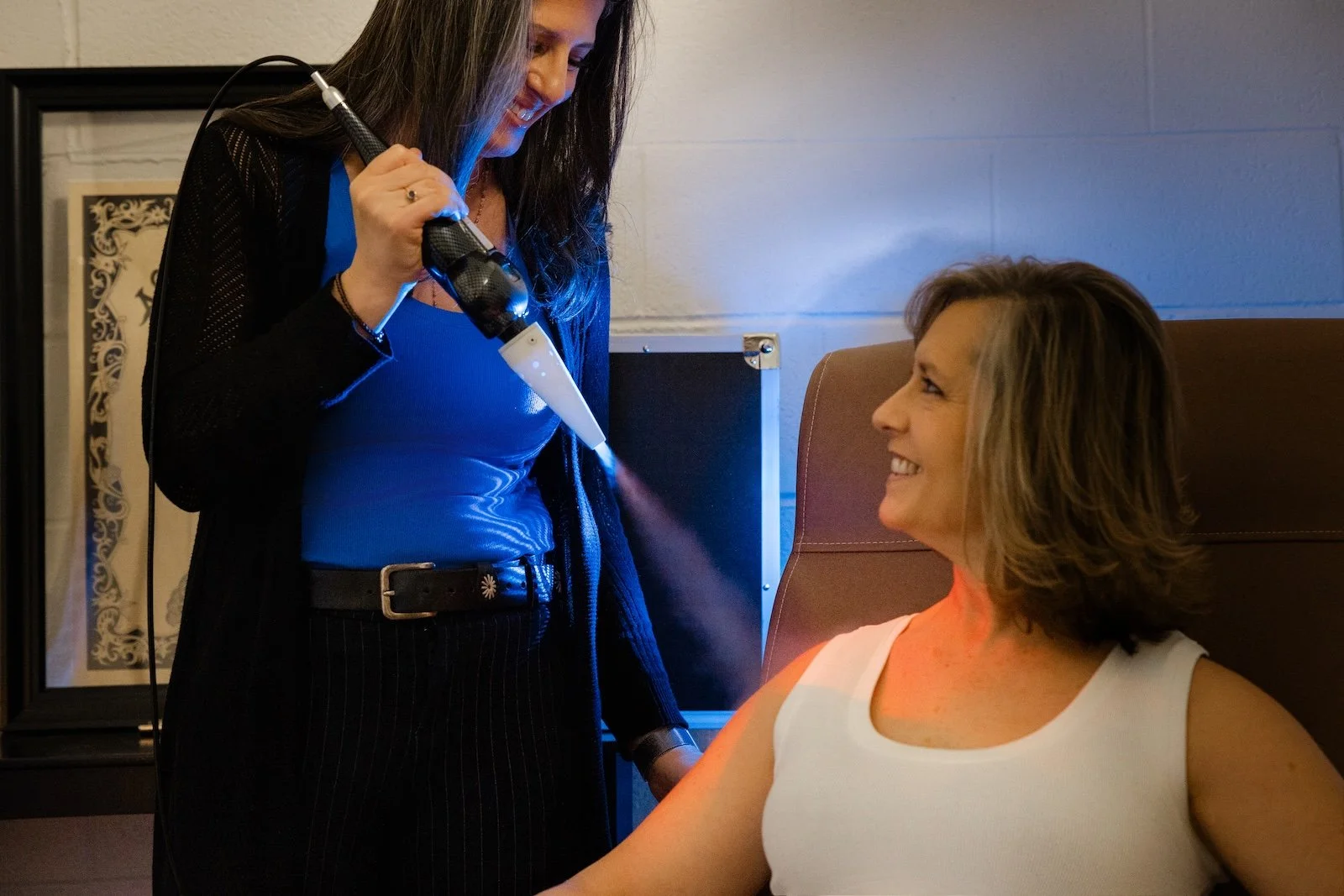
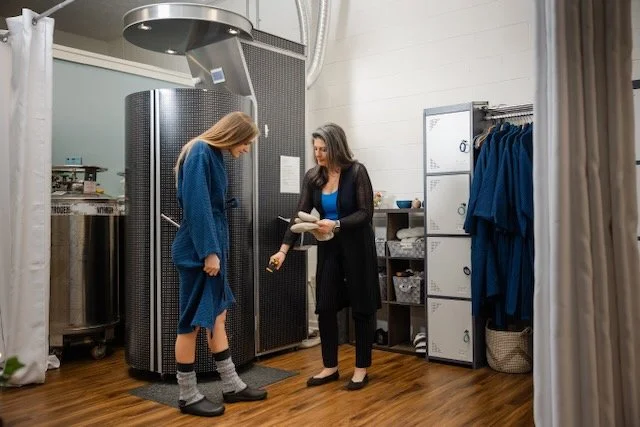
Equipment: Juka Cryosauna
Conditions that may benefit
Rheumatic diseases (arthritis)
Fibromyalgia
Anxiety and depression
Acute and chronic pain
Skin conditions (eczema, psoriasis)
Migraine headaches
Limited range of motion from sprains, strains, overused muscles, etc.
Muscle fatigue from exercise
Mild (controlled) asthma
Contraindications
Acute or recent cerebrovascular accident
Uncontrolled seizures
Raynaud’s Syndrome
Fever
Tumor disease
Symptomatic lung disorders
Bleeding disorders, severe anemia
Infection
Cold allergy
Acute kidney and urinary tract diseases.
Pregnancy
Severe Hypertension (BP> 180/100)
Acute or recent myocardial infarction
Unstable angina pectoris
Arrhythmia
Symptomatic cardiovascular disease
Cardiac pacemaker
Peripheral arterial occlusive disease
Venous thrombosis
Path to wellness
Recommended frequency 3 times in a week
Combine with Red Light Therapy and/or Compression Therapy for additional benefit
Book your session
FAQ
-
It’s more like standing in front of a freezer than jumping in a cold pool
Skin must be dry and with no lotion
Remove all metal jewlery
No underwire bras–we can provide a sports bra if needed
Robe, wool socks, cotton gloves and wool mittens, and slippers provided
-
Session lasts 2-3 minutes
We will measure your skin surface temperature before and after, Ideally you want your skin surface temperature to drop 30 degrees F for the most therapeutic results
Once you are in the cryosauna, you want to have as much skin exposed as you are comfortable with
Your head and neck, down to your clavicles, will be up out of the cryosauna so that you are breathing room air the whole time.
Oxygen sensors are at the head of the cyrosauna and in the room to confirm you are always breathing room air
All cryo-sessions are supervised the whole time.
-
Description text goes here